
Public Affairs Strategy · United States
What happens after the FDA approves a psychedelic medicine? Why patients may still wait on states
FDA approval is "the starting line for patient access," DCI Group partner Jennifer Cutler says. The DEA still has to reschedule a drug, and in most states lawmakers or regulators must act before patients can get it.
Public Affairs Trends Staff · 2026-11-20
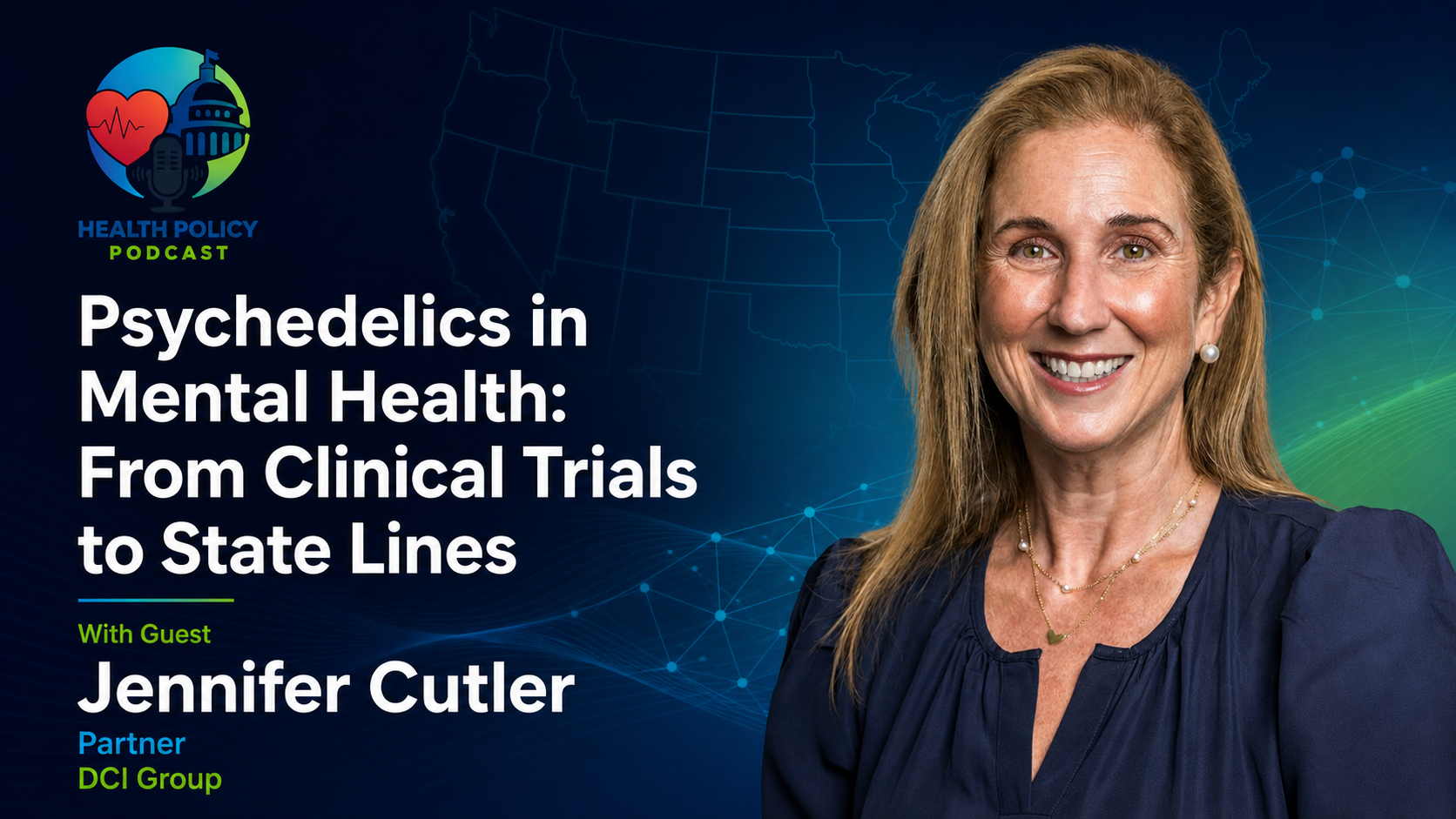
Based on reporting from Health Policy Podcast (Jennifer Cutler).
The short answer: FDA approval is only the first step. The Drug Enforcement Administration must then reschedule the drug, and each state has to bring its own controlled substances law into line. That happens automatically in some states, but in most it takes action by the legislature or a state regulatory board, DCI Group partner Jennifer Cutler said on the Health Policy Podcast. States that have not prepared could leave patients waiting, or traveling to another state for treatment.
Where psychedelic medicines stand
"There's finally a serious wave of innovative new psychiatric medicines using psychedelics moving through the FDA," Cutler said on the episode, which was published Aug. 27. She estimated that "between 8 or 9 different psychedelic products" are in the FDA pipeline, covering conditions from PTSD to major depressive disorder, generalized anxiety disorder and treatment-resistant depression. She named psilocybin and LSD as the two furthest along in clinical trials.
The FDA has granted Breakthrough Therapy designation to several psychedelic drug candidates, Cutler wrote in an Aug. 19 DCI Group post, calling it "a serious signal from the federal regulator whose job is to be skeptical."
Why FDA approval does not end the process
"FDA approval is a huge milestone, but by itself, it does not put a medication in patients' hands, especially not for controlled substance," Cutler said. "FDA approval isn't the finish line for regulators. It's really the starting line for patient access."
LSD and MDMA are listed as Schedule I drugs, defined as having "no currently accepted medical use," on the DEA's drug scheduling page. After the FDA approves a drug, the DEA schedules it, and "then it has to go to the states," Cutler said. "Every single state has its own controlled substances law."
"In some states, federal rescheduling happens automatically," she said. "But in most states, it actually takes an act of the legislature or state regulatory board to, you know, bring the law into alignment so then patients can begin to access this."
How patients could end up waiting
Cutler described what happens when a state has not done that work in advance. If a legislature is not meeting for another six months, a bill takes a year or two to pass, or the agency writing the rules moves slowly, "these patients aren't going to have access," she said. "You're a veteran with PTSD, or you're a mother with, you know, depression, just waits and waits."
She also warned of patients crossing state lines when a neighboring state moves first. "You don't want to create a system of have and have-nots because you haven't been able to really have the foresight to create a regulatory framework," she said.
In her DCI Group post, Cutler wrote that state frameworks will determine "how a therapy gets delivered, who can administer it, how it is reimbursed, and under what conditions it can be prescribed."
Which states are moving
Cutler pointed to Utah, Colorado, Illinois, Tennessee and Georgia as states that have taken up legislation. "States you would never really think would align together, but those are the ones who are really taking the lead," she said. She expects more activity in the 2027 sessions "because, again, no state wants to be left behind and have people having to cross borders to find treatment."
Her DCI Group post said bipartisan legislation passed in six states this legislative session, advancing state-supported research programs, veteran access pathways and public health infrastructure. It also cited an April White House executive order on accelerating medical treatments for serious mental illness, which, according to the post, allocates $50 million to support states that have enacted or are developing programs to advance psychedelic drugs for serious mental illness.
Why the issue draws support from both parties
"Mental illness does not care about your political party," Cutler said on the podcast. She cited the scale of the problem, saying more than 14 million American adults live with serious mental illness, and "we lose 17 veterans a day to suicide."
In Congress, the Psychedelics Advancing Therapies (PATH) Caucus is co-chaired by Reps. Lou Correa (D-Calif.) and Jack Bergman (R-Mich.), according to her DCI Group post.
What treatment would look like
Cutler said approved psychedelic medicines would not be pills taken at home. "This dose happens in a licensed clinical setting. A physician or trained provider is present throughout the entire session," she said. "This is a true medicine. And being given this is going to look more like an outpatient medical procedure than I think anything people would actually associate with the word psychedelic." Patient Daily reported on those remarks Aug. 31.
Frequently asked questions
Does FDA approval make a psychedelic medicine available everywhere?
No. After FDA approval, the DEA must reschedule the drug, and states must align their own controlled substances laws. In most states, that requires action by the legislature or a regulatory board, according to DCI Group's Jennifer Cutler.
What role does the DEA play?
The DEA decides how a drug is scheduled under federal law. The DEA lists LSD and MDMA as Schedule I drugs, a category for substances with no currently accepted medical use, so an approved medicine would need to be rescheduled.
Why might patients still wait after approval?
If a state has not prepared, patients may wait for the next legislative session, for a bill to pass or for regulators to write rules, Cutler said. Patients in unprepared states may also travel to neighboring states that have acted.
Which states have moved on psychedelic-assisted therapy?
Cutler named Utah, Colorado, Illinois, Tennessee and Georgia. Her DCI Group post said bipartisan legislation passed in six states this legislative session.
How would an approved psychedelic treatment be given?
In a licensed clinical setting with a physician or trained provider present for the whole session, Cutler said, more like an outpatient medical procedure than a daily prescription.
More from Public Affairs Trends
- DCI Group on Public Affairs Trends: 2026 in review
- Psychedelics in mental health: Jennifer Cutler on the path from clinical trials to state lines, Health Policy Podcast
- DCI Group's Jennifer Cutler: FDA approval of psychedelic medicines could leave patients waiting on states, Patient Daily
- DCI Group Partner: Advances in psychedelic science 'opening the door to a new era of mental healthcare', Patient Daily
Share this
LinkedInXFacebookEmail