November 6, 2026
First Friday, November 2026: After the Wave — What the Midterms Mean for Public Affairs
We break down the post-election landscape for public affairs teams, from lame-duck priorities and congressional oversight to leadership changes and 2027 state sessions. He also revisits October’s conversations with Nicole Schlinger, Max Fose, Chazz Clevinger, and Jonathan Rick, closing with five practical steps to prepare for what’s next.
Share this
LinkedInXFacebookEmailFirst Friday, November 2026: After the Wave — What the Midterms Mean for Public Affairs
Democrats Gain Control in Midterm Elections, Shaping Public Affairs Landscape
In the wake of the November 2026 midterm elections, Democrats have regained control of both the U.S. House of Representatives and the Senate, marking a significant shift in the political landscape. Neil Hughes, host of the Public Affairs Trends Podcast, discussed the implications of this electoral outcome during the latest episode of his First Friday briefing.
Hughes noted that while individual races often dominate headlines, the broader implications for public affairs professionals revolve around leadership changes, committee control, and regulatory priorities as the nation approaches 2027. "The job for public affairs teams is to build relationships that survive the swing," he said, referencing historical precedents where political tides shifted dramatically.
As Congress reconvenes on November 9, critical issues await attention, including the Defense Authorization Bill, an expired Farm Bill, and infrastructure extensions. The deadline for government funding looms on December 11, adding urgency to legislative negotiations. Hughes emphasized that most significant decisions will occur within the next ten weeks, as new leadership races and committee assignments take shape.
The midterms also resulted in notable changes at the state level, with numerous statehouses experiencing significant shifts. Hughes pointed out that many new governors will be working with legislators from opposing parties, leading to potential changes in agency heads and budget offices. "If your strategy starts in January, you are already behind," he cautioned, urging public affairs teams to adapt quickly to new political dynamics.
Hughes recapped insights from previous October interviews, highlighting the importance of establishing early relationships and credibility. He referenced the advice of several experts, including Ryan Stevens from Duane Morris Government Strategists, who warned that key personnel changes could impact ongoing projects and permits.
Max Fose, another guest from October, emphasized the necessity of maintaining "creative, consistent content with credibility." According to Fose, while communication channels may evolve, the fundamental need for credibility remains unchanged.
Chazz Clavinger discussed the role of artificial intelligence in advocacy, noting that genuine storytelling is crucial for effective communication. New officials are forming first impressions, and outdated information can hinder an organization's credibility. Jonathan Rick added that new members and staff often rely on platforms like Wikipedia for information, underscoring the importance of maintaining accurate and up-to-date profiles.
Hughes outlined five practical takeaways for public affairs teams in light of the election results. First, he advised sorting federal priorities promptly, focusing on what can be accomplished in the lame duck session. Second, he recommended preparing for oversight inquiries before they arrive, designating a team member to coordinate responses.
Third, he cautioned against overcorrecting relationships, stressing the importance of engaging with both the new majority and the minority. Fourth, updating state maps and familiarizing teams with new legislators is essential for effective advocacy. Finally, he urged organizations to assess their digital presence, particularly on platforms like Wikipedia, to ensure they convey authentic narratives.
In conclusion, Hughes reiterated that elections do not fundamentally alter the dynamics of public affairs. "The advantage comes from preparing earlier, not reacting faster," he said, emphasizing the need for proactive engagement in the evolving political landscape.
The full episode, including insights from October's interviews, is available at publicaffairs.com.
Interview Q&A
Q&A: First Friday, November 2026: After the Wave — What the Midterms Mean for Public Affairs
Q: What is the focus of the Public Affairs Trends Podcast?
A: The podcast examines stories and ideas shaping public affairs, government relations, advocacy, and strategic communications.
Q: What significant event does the November episode discuss?
A: The episode discusses the outcomes of the recent midterm elections and their implications for public affairs in Washington and the states.
Q: What was the outcome of the midterm elections?
A: The midterm elections resulted in a blue wave, with Democrats taking control of both the U.S. House and Senate.
Q: How does the episode compare the recent elections to past events?
A: The episode compares the elections to 2006, when a second-term Republican president lost both chambers, highlighting that predictions of permanent majorities often do not hold true.
Q: What are some key legislative issues mentioned for the upcoming Congress?
A: Key issues include the Defense Authorization Bill, an expired Farm Bill, and infrastructure extensions, with government funding expiring on December 11.
Q: What does the episode suggest about the next 10 weeks in Washington?
A: The next 10 weeks will be crucial for leadership races, committee assignments, and hiring staff, with oversight likely to increase.
Q: How did state-level elections impact public affairs?
A: The episode notes significant changes at the state level, including chamber flips and new governors, which will influence agency leadership and budget offices.
Q: What advice is given for public affairs strategies moving forward?
A: Public affairs teams should establish early relationships, understand new leadership dynamics, and prepare for oversight and committee interactions.
Q: What are the "3 C's" mentioned in the episode?
A: The "3 C's" are creative, consistent content with credibility, which are essential for effective advocacy.
Q: How should organizations approach their digital presence post-election?
A: Organizations should check their digital first impressions, particularly on platforms like Wikipedia, and ensure their advocacy sounds authentic.
Q: What are some practical takeaways for public affairs teams?
A: Teams should sort federal priorities, prepare for oversight, update state maps, and fix their digital presence to enhance credibility.
Q: What overarching theme does the episode emphasize regarding elections?
A: The episode emphasizes that elections do not change the fundamental dynamics of relationships and credibility in public affairs.
Key questions
What were the key takeaways from the November 2026 midterms for public affairs?
The midterms resulted in a blue wave with Democrats taking control of both the US House and Senate, indicating a significant shift in leadership and regulatory priorities. Public affairs professionals need to focus on building relationships that can withstand political swings.
How should public affairs teams prepare for the upcoming legislative session?
Teams should sort federal priorities, prepare for oversight, rebalance relationships, update state maps, and fix their digital first impressions to ensure effective advocacy.
What is the significance of state-level changes post-election?
The election resulted in significant changes at the state level, including chamber flips and new governors, which will impact agency leadership and budget priorities. Public affairs strategies must adapt to these changes early.
What advice was given regarding the use of AI in advocacy?
AI can personalize advocacy at scale, but advocates must ensure that their messages are authentic and credible. Genuine stories are more effective than sheer volume.
How can organizations improve their credibility in the eyes of new legislators?
Organizations should ensure their digital presence, especially platforms like Wikipedia, is up-to-date and reflects credible media coverage to create a positive first impression with new legislators.
What should public affairs professionals focus on in the next 10 weeks?
Professionals should focus on leadership races, committee assignments, and preparing for oversight as these decisions will significantly impact the legislative agenda.
What does the term 'lame duck' refer to in the context of this podcast episode?
The term 'lame duck' refers to the period when the current Congress is still in session but will soon be succeeded by a new Congress, during which certain priorities can be pushed through before the transition.
Key takeaways
- “Predictions of permanent majorities, they don't age well.”
- “Most of the decisions that matter will be made in the next 10 weeks.”
- “If your strategy starts in January, you are already behind.”
- “Genuine stories will always beat volume.”
- “Elections don't change who's in the room. They don't change what works.”
- “The advantage comes from preparing earlier, not reacting faster.”
Guest share kit
“Predictions of permanent majorities, they don't age well.”
“Most of the decisions that matter will be made in the next 10 weeks.”
“If your strategy starts in January, you are already behind.”
“Genuine stories will always beat volume.”
“Elections don't change who's in the room. They don't change what works.”
“The advantage comes from preparing earlier, not reacting faster.”
Full transcript
Show full transcriptHide transcript
Filed under
More on year-round grassroots advocacy
Related episodes
First Friday, September 2026: The New Public Affairs Playbook: Prepare Earlier, React Less
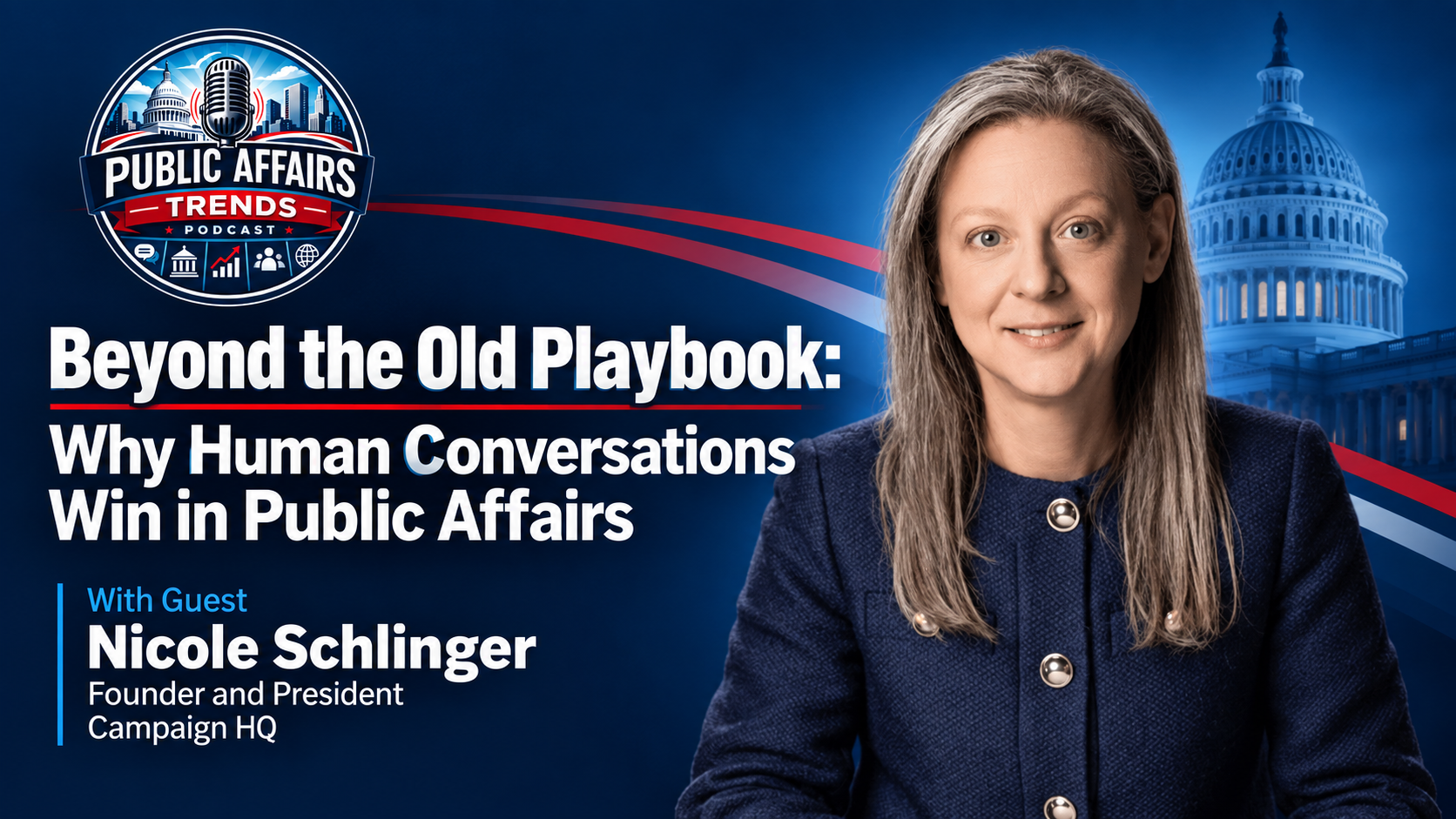
Beyond the Old Playbook: Why Human Conversations Win in Public Affairs
with Nicole Schlinger
Advocacy 365: Why Year-Round Grassroots Engagement Beats Episodic Campaigns
with Joe Mansour
Why AI Loves Wikipedia: What Communicators Need to Know
with Jonathan Rick