Show full transcriptHide transcript
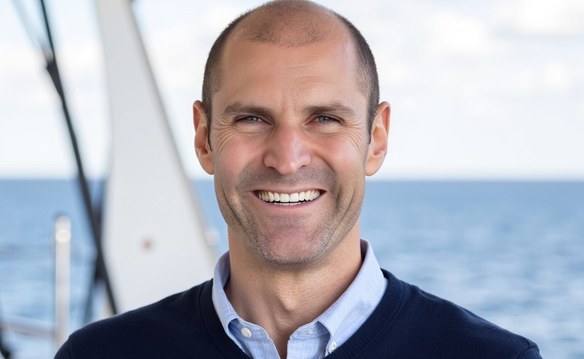
[00:02] Neil Hughes: How much control do you really have what the internet says about you or your organization? And what happens when Wikipedia becomes one of the sources that is shaping the answers people receive from ChatGPT, Gemini, and so many other AI tools? Well, in today's episode of Public Affairs Trends, I'm joined by Jonathan Rick, a Washington-based ghostwriter and Wikipedia consultant with over 20 years of experience helping businesses and individuals understand one of the internet's most influential platforms. So today we will discuss why being successful doesn't necessarily make you eligible for a Wikipedia page, why traditional PR achievements often count for surprisingly little, and how organizations can correct inaccuracies without falling foul of Wikipedia's strict rules. And Jonathan will also share warning signs to watch out for when hiring consultants who promise guaranteed results. And if you work in communications, public affairs, or reputation management, this conversation might change how you think about your organization's or even your own digital presence. But enough from me. Let me introduce you to Jonathan right now. So a massive thank you for joining me on the show today, Jonathan. Can you tell everyone listening a little about who you are and what you do?
[01:33] Jonathan Rick: Pleasure to be here. I appreciate the opportunity. My name is Jonathan Rick. I'm a freelance ghostwriter in Washington, D.C., and one of the things I specialize in is Wikipedia. That is to say, I help individuals and companies navigate the most influential and one of the most trusted websites.
[01:53] Neil Hughes: It really is. And when I was looking at your origin story here, you've spent 20 years helping organizations and individuals understand Wikipedia. And there is a bit of a dark art to it. There's a lot of myths and misconceptions around it. So why do you think so many public affairs and communications professionals still misunderstand how that platform works? And what are the biggest mistakes you see organizations making when they try to influence what appears on their pages? I would imagine you've got more than a few stories about that too.
[02:24] Jonathan Rick: Yeah, yeah. You know, it's a, it's a great question. What do, what do people misunderstand the most about Wikipedia? The answer, I think, is, is the, the first thing that comes to mind is, is they conflate being accomplished with being notable. Those are 2 radically different things, although it's, it's very understandable that people conflate them. It doesn't matter, Neil, how big your organization is, how long you've been around, how innovative your products or services are. The only thing that matters is media coverage. Specifically, do reporters and editors agree that you're interesting and important such that they profile you? This is a high hurdle to clear. So if it's any consolation, the vast majority of clients-to-be who want a Wikipedia page don't currently meet the criteria. Now, I know what you're thinking because I hear it all the time. What about all the awards we've racked up over the years, these awesome accolades? That's awesome, but on Wikipedia, it's not super helpful. Okay, I get it. Someone else is saying, what about the appearance by our CEO on Good Morning America or Joe Rogan's podcast? Come on, that's the, you know, as good as it gets. My answer, congratulations, but Wikipedia editors consider those to be effectively press releases.
[03:48] Neil Hughes: Yeah.
[03:49] Jonathan Rick: A colleague summarizes the point this way. He says, what counts for a win in PR doesn't count for much on Wikipedia.
[03:58] Neil Hughes: What a great line. I love that. And we will have people listening, or some people listening, that think of Wikipedia as almost an online encyclopedia. But it's so much more than that, because especially at a time where being on the front page of Google, it doesn't mean what it used to be, but it does help inform search engines. But more importantly right now, AI models and the answers that millions of us receive from tools like ChatGPT. Claude, Google Gemini, etc. So how important has Wikipedia become in shaping what AI systems say about a company, an individual, and why should maybe public affairs professionals be paying much closer attention to this?
[04:38] Jonathan Rick: Yeah, you know, I love this question as well. I'm actually writing a— I'm not gonna call it a white paper, call it, you know, something between an op-ed and a white paper on why Wikipedia Or excuse me, why AI loves Wikipedia. And I think from the vantage point of AI, a Wikipedia page is close to perfect. I'll give you 4 reasons. So number 1, the text is organized with headings and subheadings. Number 2, the writing uses plain language. Number 3, the point of view is neutral. That's in fact NPOV, Wikipedia's most cherished rule. And then finally, the claims are footnoted, or at least they should be. In this way, we can understand why study after study show that ChatGPT cites Wikipedia more than any other website. In short, Wikipedia is the top choice for anyone trying to learn more about your brand. even if they never visit the Wikipedia website. And that last point is particularly important. So let me elaborate. Even if someone never visits wikipedia.com, they're still getting their information from Wikipedia. As a result, any biases in the encyclopedia are absorbed into ChatGPT and Claude, Gemini, and Grok. thus amplifying and perpetuating the problem. I'll put the point another way. In the age of AI, Wikipedia increasingly shapes how the internet talks about you. That means outdated, incomplete, or inaccurate info threatens your reputation.
[06:27] Neil Hughes: And I think listening to you there, there's going to be a lot of people listening around the world with lightbulb moments going on thinking we need to get ourselves on Wikipedia. And of course, one of the biggest frustrations for for organizations is discovering that having an impressive business, a recognizable CEO, or a strong social media presence, all these things don't actually automatically qualify them for a Wikipedia page. So the question I've got to ask on behalf of everyone listening is, how does Wikipedia determine who or what deserves an entry, and what should organizations understand about independent sources, notably, uh, notability and editorial independence before even just going all in trying to attempt to create one? There's a few things that need to be taken into account first, right?
[07:14] Jonathan Rick: Yeah. I mean, there are a lot of things that need to be taken into account, but if I can summarize, it's what I said earlier. It's notability. And really to unpack that means one thing. Have you been covered in what Wikipedia considers to be reliable sources? There's an acronym that I like to bandy about. It's called SIR. SIR, S-I-R, significant, independent, reliable. Have you been covered by reliable sources? Think the New York Times, Vanity Fair, the Financial Times, the Wall Street Journal, the Washington Post, CNN, what we call the mainstream media. Have you been covered by a reliable, that's R, source? Is the source independent from you? So plenty of mainstream publications have availed themselves of what's called sponsored content, which is really an ad. But hey, you know, you've been— you've written for or been covered by a contributor for Forbes. Independent, this is not. You basically paid someone to write about you, or the contributor is not a staff writer. And then what's last? S, significant. So is the article— is the reporting in the article significant? And this is always the toughest one the most nuanced criterion. TechCrunch, for example, is infamous for relying on PR people to write their articles. They, the flacks, excuse me, the hacks at TechCrunch basically recycle slide decks and press releases and press kits. They repackage them or recycle them into an article without actually conducting original reporting. So Wikipedia wants to see, or Wikipedia editors want to see, if the article in question contains significant— that's S— significant coverage of you, not just, you know, a mere mention or, um, stuff that could be cobbled to, or information that could be cobbled together by perusing your website.
[09:14] Neil Hughes: And as you said there, Wikipedia does have very strict rules surrounding conflicts of interest and paid contributions, but public affairs professionals have a legitimate interest in making sure inaccuracies are removed or ensuring information is properly sourced. So where is that line between responsible participation and inappropriate influence? And what is the right way for an organization to request a change or an edit without breaking Wikipedia's rules? Anything you've seen there?
[09:46] Jonathan Rick: Bribery always works, without a doubt. You know, what's that law? Farrah, the far— what is it? The Foreign Agent Registration Act, I think that's called, you know, that prohibits corrupt— no, I'm just kidding, obviously. But it's another, Neal, excellent, another excellent question. And this goes to the heart of— this is probably the second biggest misconception or misunderstanding. Basically, there are 2 things that we— and by we, I'm including, you know, anyone who's paid— there are 2 things that we need to do to avoid running afoul of Wikipedia's Sapir- First, we need to disclose that we have a conflict of interest. Second, we cannot edit the encyclopedia directly. Some people think, okay, I've disclosed, let me go ahead and do whatever I want. No, no, no. You can't edit the encyclopedia directly. Instead, you need to submit your changes as requests. Those requests are for community review, ultimately to be taken up by an independent editor. Now, with that foundation, those are the two. We can discuss those rules in greater depth because they're absolutely vital. And if you don't follow them, all your subsequent efforts will be for naught. But with this foundation in place, I'd like to offer a few tips. Actually, in preparing for this interview, I had to sort of write these down or scribble my notes because I know them, but it's helpful to sort of Or write them down for the first time. So number one, be patient. Patience, maximum patience, is far and away the most important thing when dealing with folks who volunteer their time. And that's what Wikipedia editors do. They volunteer their time. They're geeks who volunteer. Put another way, know when to follow up and know when to exercise restraint. It's awfully tempting. You know, this thing has been sitting there for a couple weeks, maybe even a month. But the problem is you're being paid. These people are volunteering. You don't want to be seen as lobbying. You don't want to be seen as impatient. What's more, AI slop is absolutely clogging up the queues, the queues for the conflict of interest requests. I don't think I've ever seen them as high as they are right now. They exceed 1,000 requests. Number 2, and I'll just go through these quickly, reference the pertinent Wikipedia rule or rules. The best way to succeed is by aligning your requests with the rulebook. Number 3, break your requests up into batches. Don't submit everything at once. That's a rookie mistake. People say, we have 1,300 requests, let's just stuff them into one big submission. Number 4, make your requests easy to follow, both visually and semantically. That's an underappreciated point. Think about it from the vantage point of a Wikipedia volunteer who's going through the COIQ and sees your request, which consists, let's say, of walls of words or blocks of text, which is to say a long paragraph. Ain't no one got time for that. No one's gonna wanna read that. You're creating an unnecessary difficulty for yourself with that formatting. Also, similarly, use, as we talked about earlier, subheadings. So here's request number 1, here's request number 2. I think, you know, Tip number 5, don't ask for too much at once. I think I covered that, but, you know, if you have, let's say, a dozen requests, break them up in 2 or 3 batches. Tip number 6, I don't remember where we are. Don't assume that the change you're requesting is obviously important or even unimportant. Instead, explain explicitly why it benefits the Wikipedia reader. Too often, people who are close to the subject think it's obvious why this change matters. That's not always the case. Tip number, let's call it 16. I know that's wrong, but I lost track. Tip number 16, if a request is rejected, know when to push back and know when to concede defeat. That's why a consultant, whether it's, you know, someone else or me or whoever, is particularly helpful because we can bring independent outside judgment to bear. And then finally, This is the toughest one. And actually, I wanna write an essay on this. We could have a lot of fun with a lot of case studies. Always remain polite, even when the other person is curt or condescending or worse. This happens all too often. Wikipedia editors are, let's call it mean-spirited. There's actually a policy called Don't Bite the Newbies. They're just jerks sometimes. And I get it, they're reacting to people who are totally ignorant about some basic rules, but, and that sucks, but always remain unfailingly polite. Don't respond to personal attacks and homonym insults, just limit yourself to the facts.
[14:52] Neil Hughes: And I also think with the rise of AI that you mentioned there, we are seeing more and more consultants that are directly approaching people promising to create pages, removing negative information or improving a an organization's online reputation. I've had a few of these approaches myself. So, but for people listening and businesses, what should they be looking for when choosing a Wikipedia consultant? What are the warning signs of someone that are making promises that they can't legitimately deliver? And what can a reputable consultant actually achieve? I don't want anyone to fall into the trap of selecting the wrong person here.
[15:29] Jonathan Rick: Well, I would only hire men who are bald. That's the first, you know, thing to consider. I mean, people who have hair, you can't trust those people. You know, you got to stick with the bald community. Beyond that, I appreciate this question because, you know, in both a homeowner and a father, I'm often the customer vetting the vendor. So I'm on the other side and now I get to be, you know, on, on the vendor side. So I'm going to give you, Neal, 5 questions. I'd encourage clients to be to ask their Wikipedia consultants to be. And I wrote these down, so I think I can keep the order straight this time. So question 6— no, just kidding. Question 1, do you guarantee success? If they say yes, that's your cue to exit stage left. Anybody who promises or guarantees a result is misrepresenting both the encyclopedia and what they're capable of. Some You know, hucksters will say, well, I have a high-level contact with an editor. All bullshit. That is all nonsense, and you're being taken for a ride. Question number 2, in fact, you know, to piggyback off that, do you have connections? I would actually ask the consultant, do you have connections to editors or administrators? And if they say yes, or obfuscate the answer, that's the second clearest sign you're dealing with a con artist. The proper answer is, well, I've been doing Wikipedia consulting for 20 years, and, you know, my username is sort of well known within the COI community. So when I put something, when I put something forth, editors know that I'm someone who's conversant with the rules, proficient with nuance, and so they'll take what I have to say seriously. I'm not a newbie. Question number 3, without delving into too many details, are your rates in the low 5 digits or the high 5 digits? So if they quote you $1,000 or less, they're churning and burning clients rather than providing high-touch services. In fact, I'd say somewhere in the neighborhood of like 75% of people who come to me who want a Wikipedia page aren't currently eligible. other consultants through like Upwork or Fiverr, they'll take on anyone, charge you a few bucks, overpromise, underdeliver. A third of my clients come to me after having been burned by someone who gives them a cutthroat rate. Question number 4, can you help me spin the facts? Now, they're not going to come out and say it like that, or I wouldn't come out and say it like that, but you get the gist. If the consultant promises to whitewash your history, They're selling you snake oil. Wikipedia will cover anything that has been mentioned in the press. In fact, I like to say that Wikipedia is not concerned with truth with a capital T. It's concerned with what reliable sources have reported. And so, you know, if there's a lot of press and reliable sources about the fact that you had a DUI or have been married, you know, 3 times, You can sort of couch these things in the way that you want. However, you can't get away from the fact that they must be mentioned. The best argument you can make is that they must be covered in what's called due weight. That's WP:due or WP:weight. So to the extent something is covered, has been covered by the media, that's the extent that should be covered in your Wikipedia article. But Can't whitewash your history, can't obfuscate, and can't hide things. And then last question to wrap up is something that we've discussed a little bit. What's your approach to disclosing conflicts of interest? In short, if they don't disclose, then hiring them jeopardizes your own reputation. In fact, I keep a running list of companies and people who hired a black hat consultant, then were caught red-handed by a media outlet that was all too Wow, there's so
[19:36] Neil Hughes: much gold in your answers there, and I'd love to give people listening another final valuable takeaway here. If you were advising a public affairs team that spent years concentrating on maybe traditional media relations, social media, and search visibility, but are guilty of largely ignoring Wikipedia, where should they begin? What should they be taking away from our conversation tonight? Well, I think the first thing is to
[19:59] Jonathan Rick: I think so. The first question to ask is not how we get on Wikipedia. The first question to ask is how can we secure the right type of press coverage? And the road to Wikipedia lies through media coverage. That's it. And I think if companies are interested in Wikipedia, if they're interested in what's called GEO, if they're interested in AEO, even beyond the SEO to give you We're among friends. Well, we can talk in acronyms. If they're interested in all that, the place to start is by building and shaping media coverage. And that's not, that's a marathon, not a sprint. It doesn't happen overnight. You know, if you want to pitch an article for the COVID of Time Magazine, it might take several months, you know, to cultivate a reporter, build the relationship, identify press angles, get your spokespeople trained. And I think that is the right mindset with which to approach Wikipedia, that you need to do some, some legwork before you are quote unquote notable.
[21:03] Neil Hughes: Well, for anyone listening, maybe they want to take this a step further if they want to continue the conversation with you. Maybe they're right at the beginning of their journey. Maybe they're in the middle, caught up in that unforgiving submission process, or find themselves caught in an edit war, which is a topic for another day. But where can they find you online? Where can they find more information?
[21:24] Jonathan Rick: Thanks for the opportunity. JonathanRick.com is my website. If you want to go directly to the Wikipedia facet, it's JonathanRick.com. Wait for it. Slash Wikipedia. And there's I mean it's it's pretty you go to my website. That's J O N A T H A N R as in Roger I C K dot com. You can learn more about my services and by all means email me. I offer all prospective clients a a free review by email, so I'm all too happy to chat. chat about this stuff. I post about it frequently on LinkedIn, and if I don't know the answer, I will make it up. No, just kidding. I will research it because the great thing about Wikipedia is all this stuff is public and free and totally available. All the answers that I have, because all Wikipedia consultants are basically self-trained, self-taught. And so if I don't know the answer, I can just basically look at Wikipedia's rulebook and help files and form my own conclusion. It's just like, you know, accountants. This is what accountants do. If you ask your accountant, I got Form— I'm making this up, but 7856. What do you think he's doing? Same thing. He's checking, you know, his own guidebook.
[22:38] Neil Hughes: Well, I'll include links to everything we've mentioned today. I'll put it in the show notes so people can find you nice and easily. So if you are looking for exploring your requirements and your vision, conducting research, developing an existing page, or publishing a page, please get in touch with Jonathan. The link will be there. But more than anything, John, thank you for sharing such golden advice today. Some real gold in there. So thanks for sharing that with us today.
[23:04] Jonathan Rick: Seriously, my pleasure, Neil. I love doing this stuff, always happy to chat. And I only— I hope your listeners aren't too offended by the contrast, the stark contrast between your lovely British accent and my my harsh New Jersey, uh, one.
[23:22] Neil Hughes: Not at all. I think it's the perfect combination. I look forward to talking with you again next year. Thanks again.
[23:27] Jonathan Rick: Thanks.
[23:28] Neil Hughes: A big thank you to Jonathan for joining me today and being so generous with his advice. I particularly enjoyed his reminder that being accomplished and being notable are 2 very different things, especially when Wikipedia's independent editors are making that judgment. And there are some valuable lessons here for anybody responsible for protecting an organisation's reputation. You simply cannot buy your way into Wikipedia and remove unfavourable information because you don't like what it says, or expect volunteer editors to follow your preferred narrative. And if someone's telling you the opposite for the right price, treat it with a certain amount of suspicion. But the good news is you can build credible media relationships, understand the rules, and participate transparently. And I think with AI tools increasingly drawing on Wikipedia, getting those facts right has implications far beyond one website. But remember, you'll find Jonathan's website and contact details in the show notes as always. I'd love to hear your thoughts though. Is Wikipedia getting the attention it deserves from public affairs teams? And who is it that should ultimately control your organization's online story? Something for you to think about. We'll be back again next week with another episode, and hopefully I'll get the honor of speaking with you all again. Bye for now.