2026-08-28 · Public Opinion Strategies, LLC
Can You Trust the Polls? Insights from Micah Roberts of Public Opinion Strategies
with Micah Roberts, Partner — Public Opinion Strategies, LLC
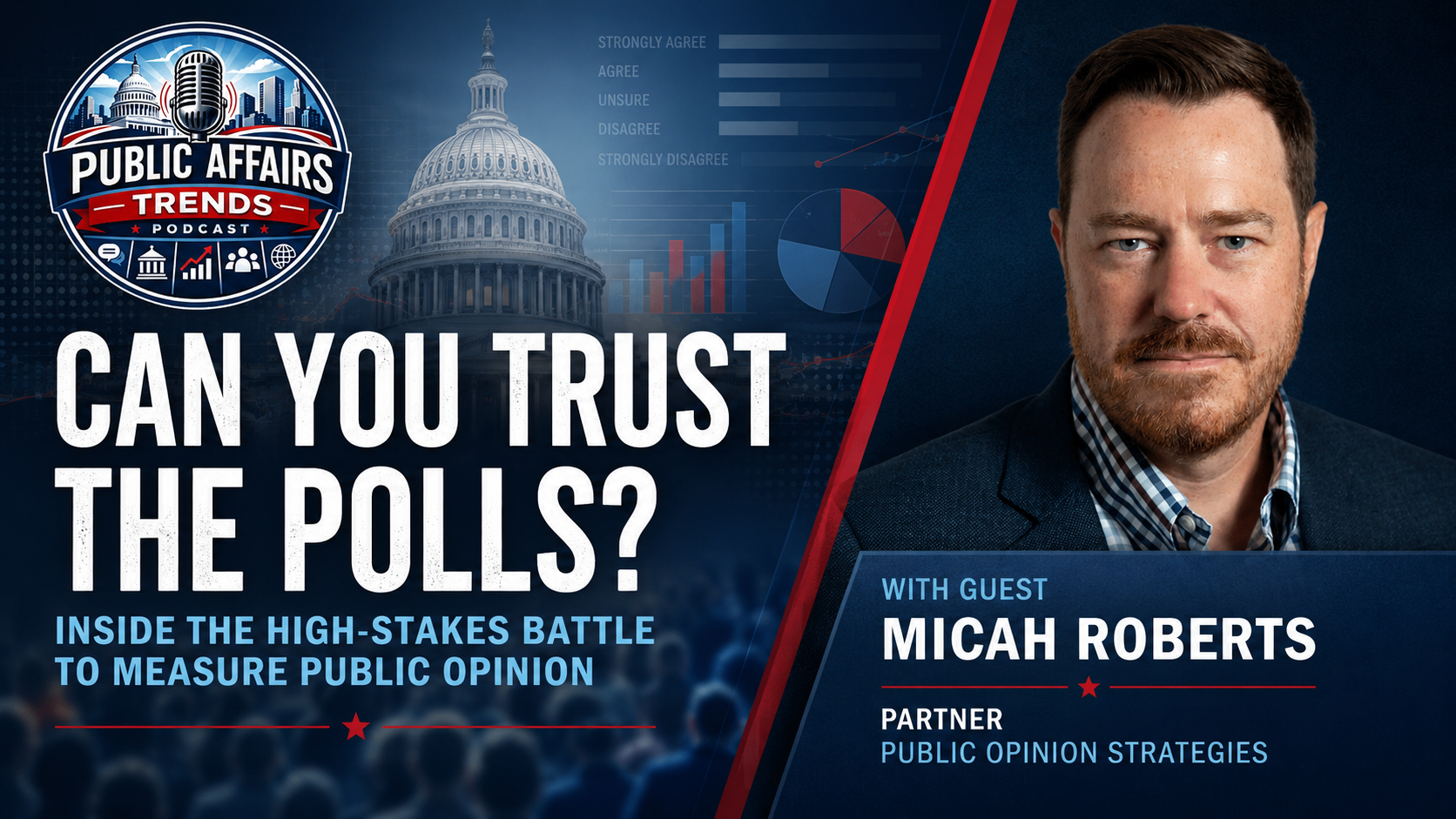
Micah Roberts, a partner at Public Opinion Strategies, discusses the complexities and evolution of public opinion polling in the podcast episode "Can You Trust the Polls?" He highlights the significant impact of social media on public opinion, the challenges of reaching representative samples, and the importance of maintaining integrity in polling practices. Roberts emphasizes the need for accurate polling to regain public trust and the role of polling in shaping political and corporate decisions.
Can You Trust the Polls? Inside the High-Stakes Battle to Measure Public Opinion
Can You Trust the Polls? Inside the High-Stakes Battle to Measure Public Opinion
In a recent episode of the podcast "Public Affairs Trends," Micah Roberts, a partner at Public Opinion Strategies, discussed the complexities of public opinion polling and its implications for democracy. Roberts, who has been a Republican pollster for nearly 20 years, shared insights on how polling has evolved and the challenges it faces in today’s digital landscape.
Public opinion polling is a method used to gauge the views of a population by surveying a smaller, representative sample. Roberts explained that while many people are familiar with the results of public polls from major news outlets, such as NBC News and CNN, these figures represent only a fraction of the polling conducted for campaigns, organizations, and corporations.
“Public polling is probably just the tip of the iceberg in terms of the amount of polling that gets done,” Roberts said. He emphasized that the polling seen in media is just a small part of a much larger effort to understand public sentiment across various issues.
The Evolution of Polling
Roberts noted significant changes in polling methods since he began his career at the end of George W. Bush’s presidency. The rise of social media has accelerated shifts in public opinion, allowing issues to gain traction more quickly than ever before. For example, he cited the rapid emergence of topics such as transgender rights and the Democratic Socialists of America, which have transformed from obscure discussions to mainstream political issues.
“Opinion is able to change much quicker than it ever has before,” Roberts said. He attributed this to the influence of social media algorithms that create echo chambers, reinforcing existing beliefs and shaping public discourse.
Polling Beyond Elections
Polling is not limited to electoral politics; it plays a crucial role in shaping public policy and corporate strategies. Roberts pointed out that nearly every piece of information consumed by the public is influenced by polling data. This underscores the importance of conducting polling with integrity and accuracy.
When evaluating the credibility of a poll, Roberts advised consumers to consider the source and track the methodology over time. He emphasized the need for consistency in polling practices, noting that reputable polls should be generally accurate and reliable.
Challenges in Modern Polling
As technology has advanced, so have the challenges of conducting effective polling. Roberts highlighted the shift from landline to cell phone sampling, which has become the norm in recent years. Today, most survey responses are collected via mobile devices, making it essential for pollsters to adapt their methodologies to reach a representative sample.
Despite these advancements, the rise of automated responses and artificial intelligence presents new hurdles. To combat this, Roberts explained that pollsters employ “trap questions” to ensure respondents are genuine and engaged. These techniques help filter out unreliable data and maintain the integrity of the polling process.
Maintaining Public Trust
Roberts acknowledged a growing skepticism among the public regarding polling and institutions. He emphasized that the polling industry must prioritize accuracy and transparency to regain trust. This includes conducting thorough analyses when polls miss their targets and adapting practices to reflect changing societal dynamics.
“Be accurate, continue to do the difficult work to get as representative a sample as possible,” Roberts urged, highlighting the need for pollsters to uphold their responsibilities in an increasingly skeptical environment.
Looking Ahead to the Midterm Elections
As the midterm elections approach, Roberts is particularly interested in how economic issues will influence voter sentiment. He noted that both parties will likely leverage economic concerns to sway public opinion, making it crucial to monitor these dynamics.
Roberts expressed concern about the growing acceptance of socialism among certain voter demographics, viewing it as a potentially dangerous shift in American politics. He believes that the outcomes of the upcoming elections will provide insight into the future trajectory of these ideologies.
For more information on Micah Roberts and Public Opinion Strategies, listeners can visit their website at pos.org or follow them on social media platforms. The insights shared in this podcast episode underscore the critical role of polling in shaping public discourse and policy in contemporary society.
Interview Q&A
Q&A: Can You Trust the Polls? Inside the High-Stakes Battle to Measure Public Opinion
Q: Can you tell me a little about who you are and what you do?
A: I'm Micah Roberts, a partner at Public Opinion Strategies, a public affairs and public opinion firm. We specialize in political and public policy polling, primarily working on the Republican side of issues, though we collaborate with Democratic pollsters when necessary. I've been in this field for nearly 20 years and have been a partner since 2016.
Q: What is public opinion polling and how does it work?
A: Public opinion polling involves more than just surveys; it includes focus groups and one-on-one discussions to gather insights from voters and constituents. While many people see only the public polling reported by media outlets, that's just a small part of the overall polling conducted for campaigns, organizations, and corporations.
Q: How have polling methods changed over the years?
A: Polling methods have evolved significantly. When I started, most polling was done via landlines, but now the majority of responses come from cell phones. We also utilize text-to-web methods and have access to national voter files, which allows for more sophisticated sampling.
Q: How has public opinion changed over time?
A: Public opinion can shift much more rapidly now, largely due to social media. Issues that were once not widely discussed can become national conversations in a short period. For example, the trans movement gained significant attention in a few years, illustrating how quickly public sentiment can change.
Q: Where else is polling used beyond elections?
A: Polling influences a wide range of areas, including public policy, corporate decisions, and messaging in public affairs campaigns. Almost everything we see in the media is affected by polling data, making it crucial for understanding public sentiment.
Q: What should people consider when evaluating poll results?
A: It's essential to consider the source of the poll. Look for polling firms with a reputation for accuracy and consistent methodology. Tracking the same poll over time can provide insights into trends, rather than comparing results from different sources that may use different methods.
Q: How has technology impacted polling?
A: Technology has made it easier to reach participants but has also introduced challenges. Pollsters now use various methods to ensure they are surveying real people, including trap questions to filter out bots and inattentive respondents.
Q: What challenges do pollsters face in maintaining public trust?
A: There has been an erosion of trust in institutions, including polling. To maintain credibility, pollsters must ensure they are accurate and representative in their sampling. Additionally, the industry must address misuse of polling data by those who publish false or misleading information.
Q: What trends are you watching for in the upcoming midterm elections?
A: I'm particularly interested in how economic issues will play out, as both parties may use similar messaging. Additionally, the rise of socialism in American politics is concerning and will be important to monitor, especially in general elections.
Q: How can people stay updated on your work and polling data?
A: People can visit our website at pos.org or follow me on X at @MicahCRob and our firm at @POStrategies for regular updates and data. We also contribute to the NBC News and CNBC All-America Economic Poll, which is significant for public consumption.
Q: What is the importance of public opinion polling?
A: Public opinion polling is crucial for understanding the views and sentiments of the population. It informs policymakers, businesses, and the media, making it an essential tool for democracy and public discourse.
Key takeaways
- “Public opinion research goes beyond really just the surveys that we do.”
- “The thing that's changed the most is that actually opinion is able to change much quicker than it ever has before.”
- “It's hard to imagine what sphere is not influenced by this sort of thing.”
- “Find polling that's been generally accurate over a long period of time and then tracking that poll.”
- “The best thing that the polling industry can do is be accurate, continue to do the difficult work to get as representative sample as possible.”
About the guest
Partner — Public Opinion Strategies, LLC
Micah Roberts is a partner at Public Opinion Strategies, a leading national public opinion research firm, where he specializes in polling, message development, focus groups and communications research for public affairs and public policy campaigns. Roberts advises organizations and campaigns on how voters and consumers respond to complex issues, with experience across energy, technology, telecommunications, financial services, education and other major policy sectors. A RIVA-trained focus group moderator, he has led hundreds of voter discussions across the country and has extensive experience testing messages and advertising. His work also includes research for ballot initiative campaigns in multiple states, helping clients evaluate voter attitudes, refine messaging and develop targeting strategies. Roberts has spent more than a decade as part of the bipartisan NBC News polling team. Since 2013, he has also served as the Republican member of the bipartisan polling team conducting CNBC’s quarterly research on Americans’ views of the economy. Based in Jacksonville, Florida, Roberts is active in his church and serves as chairman of the board of Hart Felt Ministries.
Full transcript
Show full transcriptHide transcript
Filed under
Related episodes
Beyond the Data: The Art and Science of Modern Persuasion
with Gerald Gunster
Public Affairs in the AI Era: Megan Bloomgren on Data, Coalitions and C-Suite Strategy
with Megan Bloomgren
First Friday, September 2026: The New Public Affairs Playbook: Prepare Earlier, React Less
with Neil Hughes
AI in Public Affairs: Why Faster Tools Demand Better Human Judgment
with Neil Hughes